Every job below is one we do ourselves across Chula Vista.
We frame new decks with pressure-treated joists on concrete piers, sized to the actual span and load, not just what's easiest to cut. Ledger boards get flashed where they meet the house, since that connection is where most decks around here start to fail. We'll walk you through wood versus composite before we order a single board.
Soft spots, bouncy joists, and rails that move when you lean on them usually trace back to one bad connection, and we find it instead of just patching the surface. We replace rotted joists, re-set posts that have shifted, and swap out fasteners that have backed out or rusted through. Small repairs can often be done in a single day.
Sun and salt air fade and dry out wood decking faster here than people expect, and an unsealed deck can start to gray within a season. We pressure wash, let the wood dry fully, and apply a stain or sealer rated for UV exposure. Composite decks don't need this, which is one reason people switch.
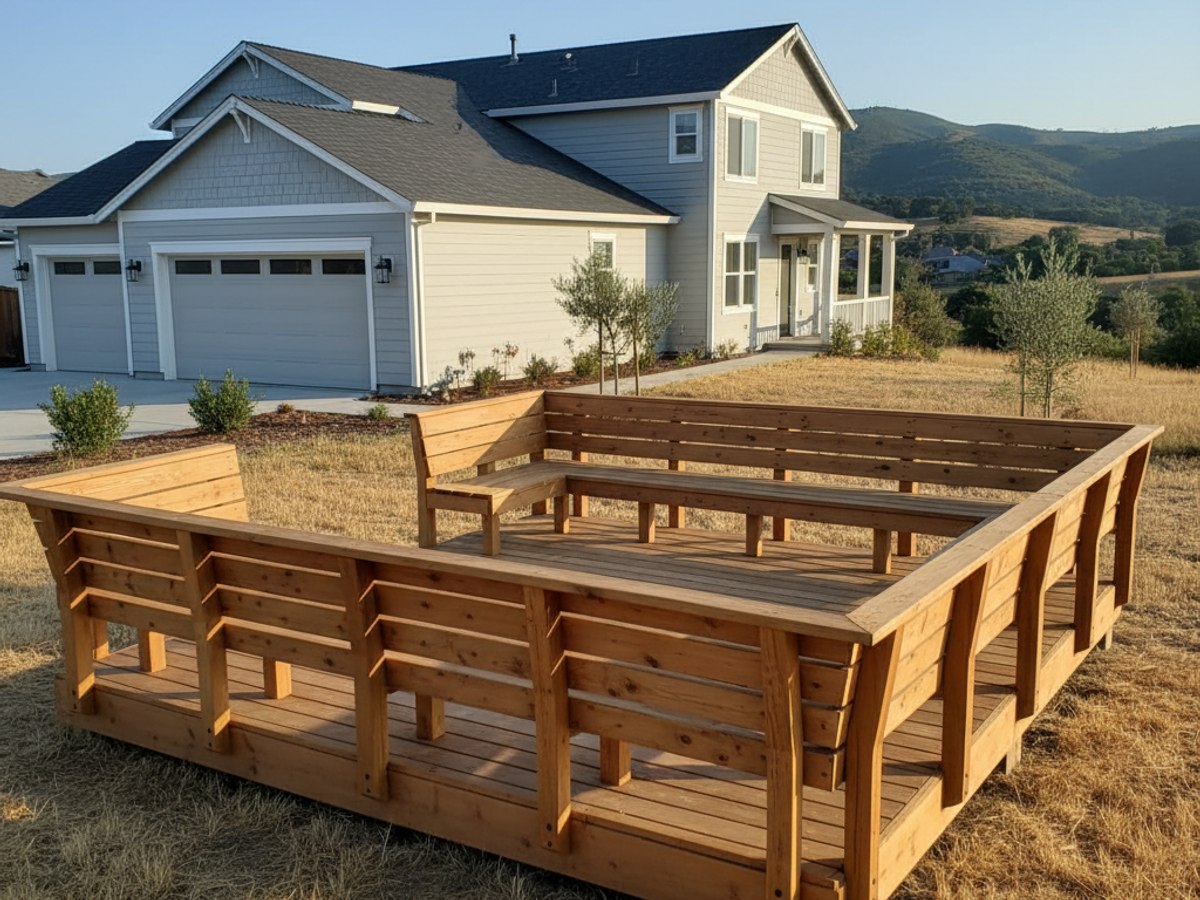
Multi-level layouts, built-in benches, pergola shade, and stairs that land where you actually want them, planned around your yard instead of a stock template. We'll sketch the layout and give you a real material list before construction starts. Slope, drainage, and setback lines all get worked out on paper first.
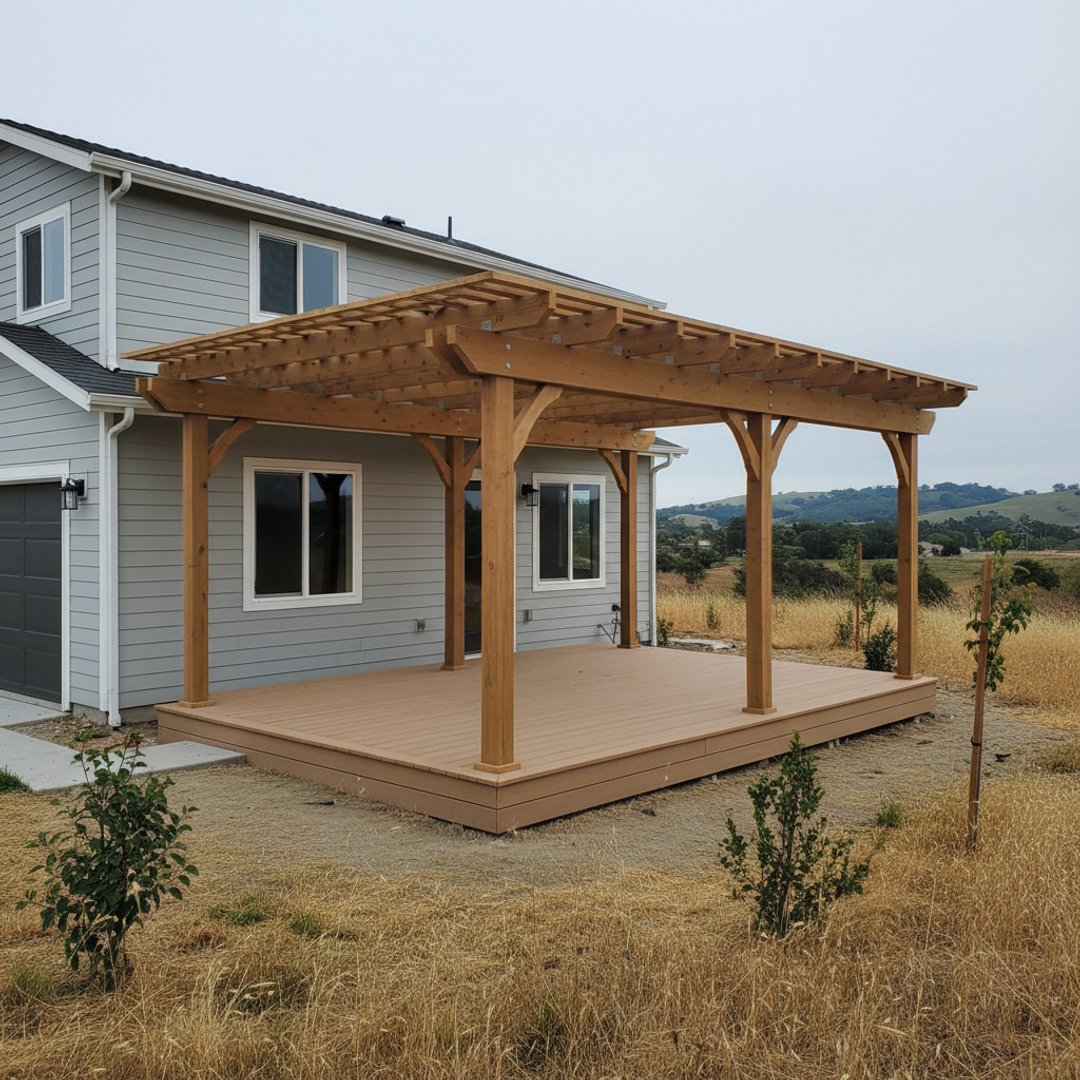
Composite boards skip the annual sanding and re-staining that wood decking needs, though they cost more per square foot up front. We install with hidden fastener systems and the board gapping the manufacturer specifies, since composite expands and contracts more than wood does in the heat. Most composite comes with a manufacturer warranty we'll register for you.
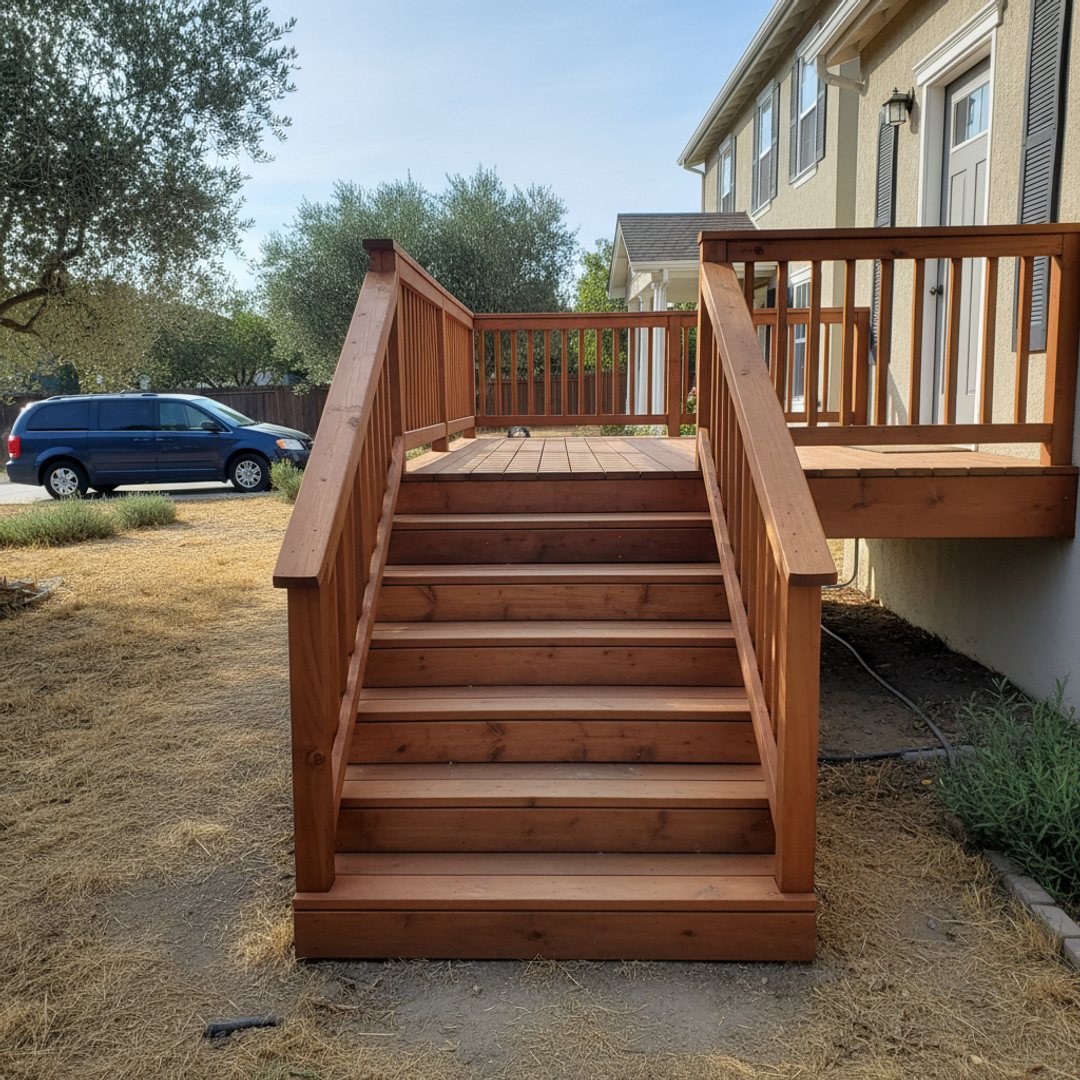
Guardrails need to hit 36 to 42 inches depending on the deck height, and baluster spacing has to keep a 4-inch sphere from passing through. We build to those numbers so the railing passes inspection the first time, in wood, cable, or aluminum.
If the frame underneath is still sound, we can pull the old decking and put down new boards without rebuilding the whole structure. This is common on decks where the joists are fine but the surface boards have cupped, split, or rotted from years of standing water.
Decks that step down a slope need extra attention to beam spans, post height, and stair stringer layout, since a mistake at the top compounds by the time you get to the bottom landing. We engineer each level to carry its own load and tie back to the house correctly.
We tear out old decks, haul off the lumber, and pull every nail and screw out of the ground before starting anything new. This matters if you're switching from wood to composite or moving the footprint.
A pergola or shade structure built onto an existing deck needs its own posts and footings, not just lag bolts into the decking boards. We size the structure to actual wind and shade needs for the yard it's going in.
Four steps, and no surprises in any of them.
You tell us what you want doing, we look at what is actually there, and we ask the awkward questions early.
In writing, itemised, free. If something might add cost later we flag it now rather than at the end.
Same crew throughout. We cover your floors, keep the dust down and tidy up before we leave each day.
You point out anything you are not happy with and we fix it before the invoice, not after.
Deck installation and repair work travels across most of San Diego County.
Questions that come up once a deck project is underway.
Describe the problem and we will tell you what it probably is. No obligation.